The weirdest instrument you've ever heard about - Thermoacoustic Flute

 Hi there!

Today I want to show you an invention what I've made few weeks ago.

I call it:

 Thermo-Flute

The name is came from two words:

thermoacoustics / pan flute


The base of the experiment is very simple.

A standing wave thermoacoustic engine (also called Hofler tube).

This tube has no moving parts.

The tube works as a quarter wavelength resonator like the Sondhauss tube

but it has a cold and a hot heat exchangers and a stack regenerator between them.

The  strong temperature gradient across the stack regenerator creates a thermodinamic cycle 

of oscillating air that produce sound.

How do these Hofler tube generate sound? - demonstration from Naval postgraduate school


This small thermoacoustic sound source was invented by Professor Tom Hofler

around 2000.

The sound intensity changes with the temperature difference.

Higher temperature difference gives higher amplitude for the sound.

It means the engine could also make sound if the hot and cold heat exchangers changing place.

So we can also make a flute with deep freezing.


In my invention the resonator length could be variable quickly in time 

with opened tuned holes as the flute works.

My thermoacoustic flute has 5 notes only: E-D-C-A-G

This is a part of a mixolid - pentatonic scale if I'm right.

The engine has limits yet, and the ThermoFlute is a bit out of tune on the video

because the temperature changed a bit when I shoot this video,

but anyway this is the first working model what I've made 

and I need to develop it 

as a "just for fun" project in the future.


If you want to build your own Thermoacoustic Flute 

just follow my YOUTUBE channel, SUBSCRIBE and HIT THE BELL button to advice.

Here is the short video how I play on the world first thermoacoustic flute:


How to make an ALL FREE STIRLING ENGINE?

 Yes, you read it well!

All free!

It means Free power piston, 

Free displacer piston, 

and moving cylinder.

If I remembere right it was a new invention around 2000 from Japan.

They called it "JUMPER" and this name is right!

I've made several different versions from this little 

BETA Stirling engine.

I made it with legs:


Also I made a weird car with this beta Stirling engine:


But today I want to show you a spring tensioned version.
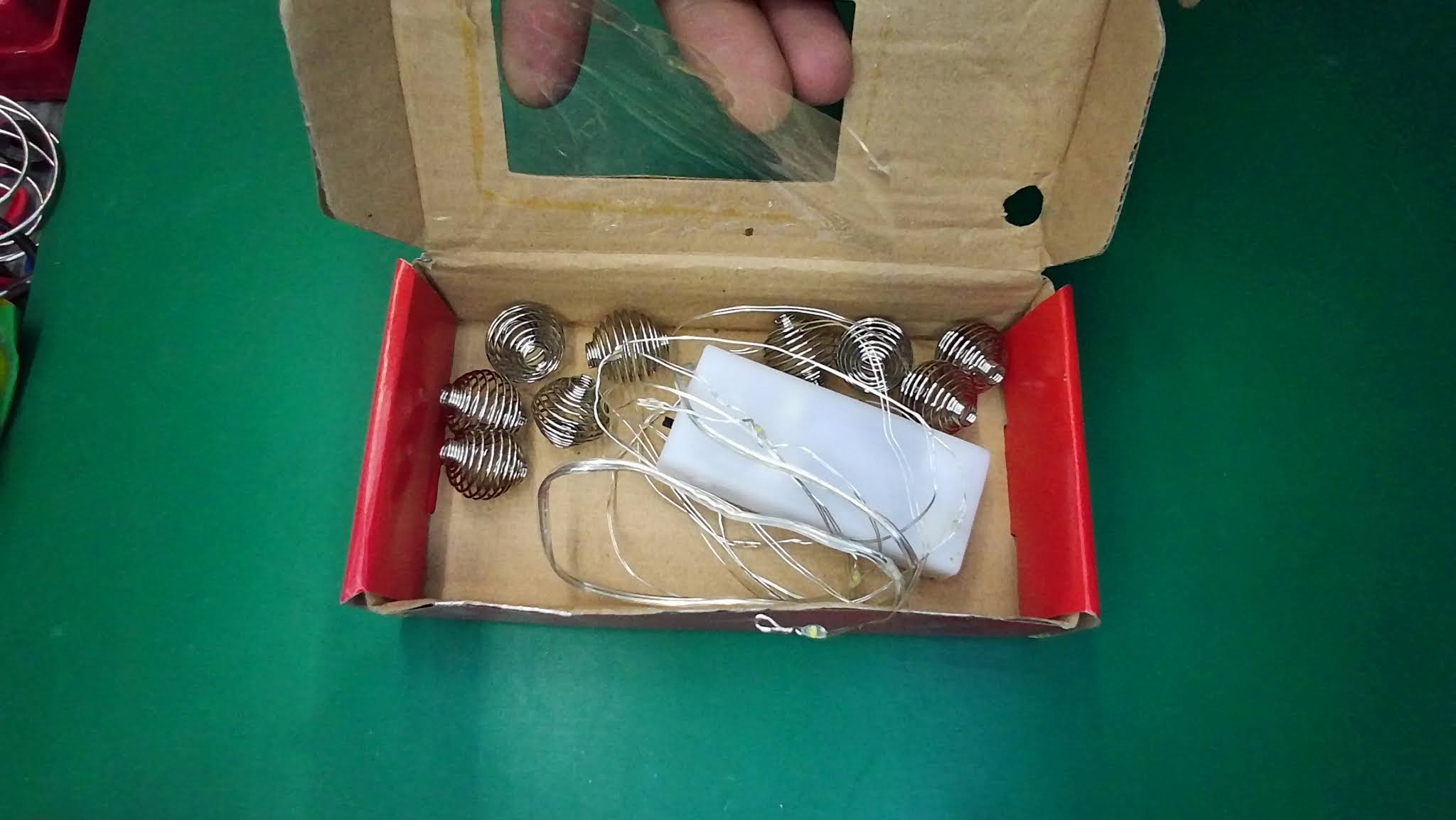
I found the small spiral ball springs on a Christmas LED light.


Later I found a small diameter test tube...
It was filled with Vanilla Pod.


So I started to make a new engine with it.
The base was an 1 ml glass syringe


I cutted a 10 cm long piece from the Vanilla tube.
I cutted the syringe around the half of the length.
I take a piece of steel wool for a twisted
3cm long regenerative displacer.
Also I cutted a piece of fine mesh to the end of the cutted syringe
to save the syringe piston's
free movement from the steel wool particles.

Put all the piece together.
I used glue for the spring ends.
It was fixed between the Syringe top and the piston head.
The piston moves freely inside the spring.

Another glued part is the main Vanilla tube and the syringe body.

So easy to assembling this free piston engine.

I've made a short film about how to make it:


I hope you enjoy it!

Please subscribe my youtube channel 
and hit the BELL button for the news!

Share this blog post or the video link with your friends on your social media platforms!
THANKS!

Stay tuned!
See You Soon!
BLADE


Simple as possible beer can TASHE Stirling cycle engine (free piston)

 Did you read about TASHE Stirling engine yet?

This is a thermoacoustic traveling wave engine with Stirling-like cycle.

Thermoacoustic engines are working with a fantastic phenomena.

A short historical list about thermoacoustics:


The first TA engine came from Byron Higgins 1777!!! but it was recorded first at 1802.

He made the first singing flame with Hydrogen where the gas burned in a tube.

BUT

Do you hear about singing drums from Japan?

They are made from a rice coocker drum. The water heated up.

In the middle of the drum they put a screen to hold the rice.

When the steam is growing in the drum they put the rice onto the screen and the 

thermoacoustic (or steam thermoacoustic) oscillation will start soon.

The first written memory about this effect came from a Buddhist monk 

1568

OMG!


Anyway the next experiment came from Sondhauss who made the "flameless" singing bulb.

The bulb was heated up and the neck tube was cooled in 1804.

Later Rijke  made a straight tube with heated gauze in.

The first real developement started in the early 30s

in the military segment for the pulse jet V-1 buzz bomb.

It worked with a combustion-induced oscillation.

They've made few different versions with also without valve to increase the efficiency.

The space program given the next generation of the pulse jet rockets around 1960.

-o-

The peaceful thermoacoustics is started with Ceperley and Wheatley from Los Alamos National Laboratory.

They started to develop a standing wave engine with resonator and stack base regnerator with two heat exchangers.

The next generation of standing wave thermoacoustic engine came from Greg Swift.

It has 700W acoustical energy with 9% thermal and 13% of Carnot efficiency.


The first traveling wave thermoacoustic device developed by Yazaki

but he used stack based regenerator yet.

The first regenerator based working looped traveling wave TASHE was demonstarted by 

Swift and Backhaus...


and soon Tijani and Spoelstra.

The Tijani's engine worked with 49% of Carnot at 40 bar of Helium

generated 280W


etc...etc...etc...

The original TASHE needs a resonator tube.

It was changed later to mechanical resonator.

The mechanical resonator is a mass-spring system.

This system radically reduces the losses compared to the acoustical resonator.

So anyway, we have lot of papers about the thermoacoustics

also from TASHE engines but only for industrial, millitary, or space applications.

The hobbyist Stirling builders all around the world don't really know this type of engine.

Stirling-guys really like the crankshaft and the joints movement, the knocking noises etc.

The model engineers could make nicely machined desktop toys

like this one


or this one


The youtubers are started to make Stirling engines from scrappy parts.

The most popular the soda, soft dring, energy dring, beer can

based Stirling engines with folded crankshaft and rods:


You could find hundreds of videos about gamma and beta type engines.

I've started to make no crank 

beta

free piston Stirling engines 

few years ago.

This confgiguration is the most popular design I've ever made:


I started to design a more simple beer can Stirling engine

when I meet with an interesting video on TK motor's channel.

It was an annular designed TASHE engine with conical shaped ends and it worked with membranes.

The membranes could help to reduce the Gedeon streaming in the loop.

That stream is a gas flow where the acoustic fluctuation goes.

It could reduce the cycle efficiency.

So the membrane could stop this flow and also it could substitute some gas volume because the gas in tube has mass and elasticity aka spring constant. So it is a spring-mass system.

My friend Tibsim is made an interesting video in his channel about how the gas "piston" moves in the tube 

also how the heat start to amplificate this movement:

You could calculate how long could be a full wave length looped thermoacoustic engine at 20˙C and 50Hz.

343,4 m/s : 50 = 6,868 m

So it is a big circle.

The inner geometry and the membranes gives some possibility to reduce the loop's length drastically

because what we want 

that is a pressure swing phase shift in the regenerator.

This is a complicate calculation originally few program could help to reduce the optimization,

but I found an easy way how to make a DIY simple

free piston TASHE (thermoacoustic Stirling heat engine) also I made a tutorial for that.

No calculations, no expensive tools, just a simple and working model.

The first working prototype was made with accordion piston, but I realise it is not available for everyone, so I started to develop a latex balloon version from this.

The frequency increased so much.

30--> 60+ Hz

The membranes tighteness and the mass on that is important to tune the frequency.

The engine works well and stable as possible with this low budget configuration.

If you want to build yours, please leave me a link bellow for your replications!


See You Soon!

BLADE